Lifesaver

I am now an official Scuba Lifesaver. Let me tell you it is not an easy course or exam. There’s a theory section (100% scored) and a practical section which includes a chunk on mouth to mouth and heart massage. Basic Life Support or BLS to its friends.

Another section is practical rescue skills in water. There’s an unconscious diver lift, tow and recus, an unconscious snorkeller rescue and three different swim scenarios. The tows are around 25 metres and the true nasty is treading water for two minutes whilst keeping the victims head out of the water…. That comes right at the end after all the rest.

The whole practical takes around an hour. You’ll sleep well after taking that I can tell you. Of course the joy is knowing those skills might save a life (although you hope not to use them ever) and for me knowing I am now able to teach these skills to others.

Last night was our usual pool night a week in from the test. We had three people there to try diving. The pure joy on their faces when they get out after an hour of gentle encouragement and they know they now have the superpower of breathing underwater. I’m hopeful we will see them again for full training with Mid Lancs SAC

The club are more than diving buddies and after ten years with them they are like family. Mid Lancs celebrates 20 years this year. What an amazing feat. It’s all about the volunteers who give their time to teach and support others. So many community groups exist purely on the goodwill of people who give their time and energy. It’s a fantastic thing. Here’s to 20 more years and I hope to celebrate with the club.
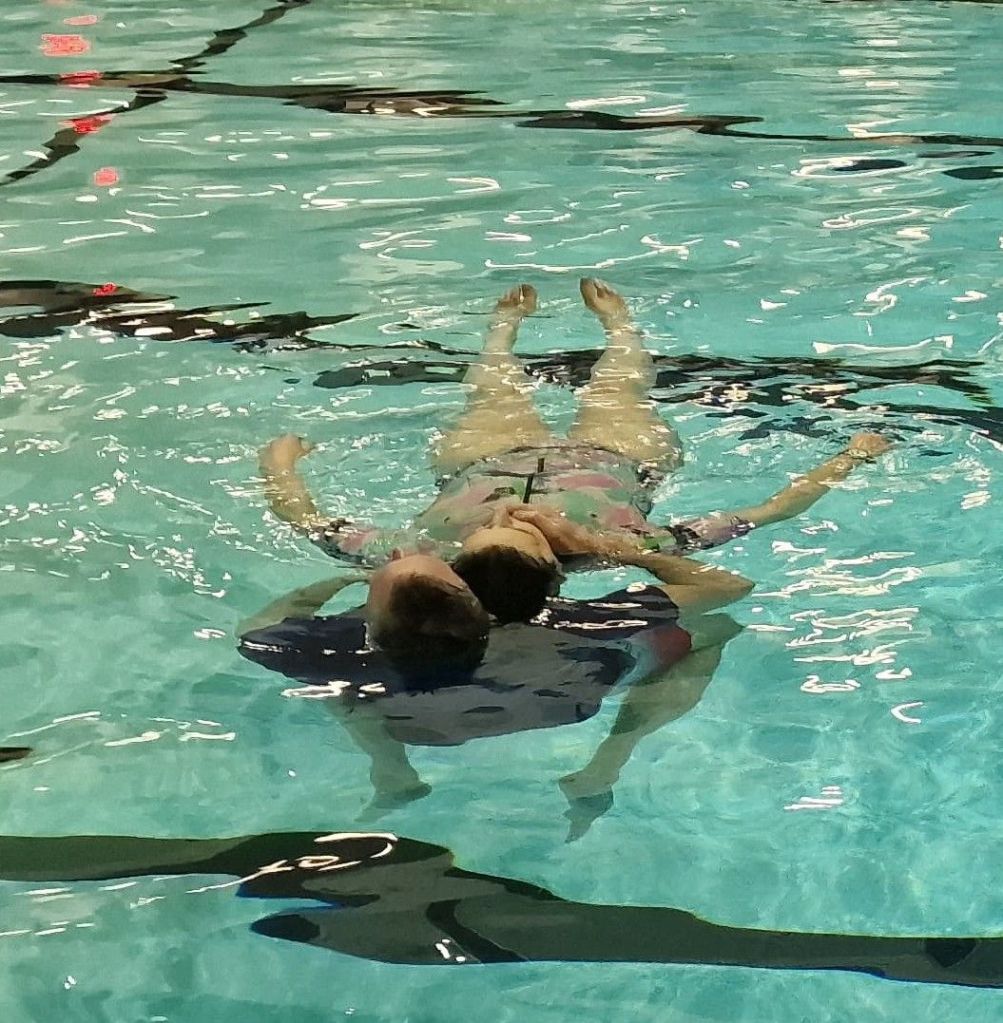
Me being the victim for a practice run.

SCUBA Dooba Don’t

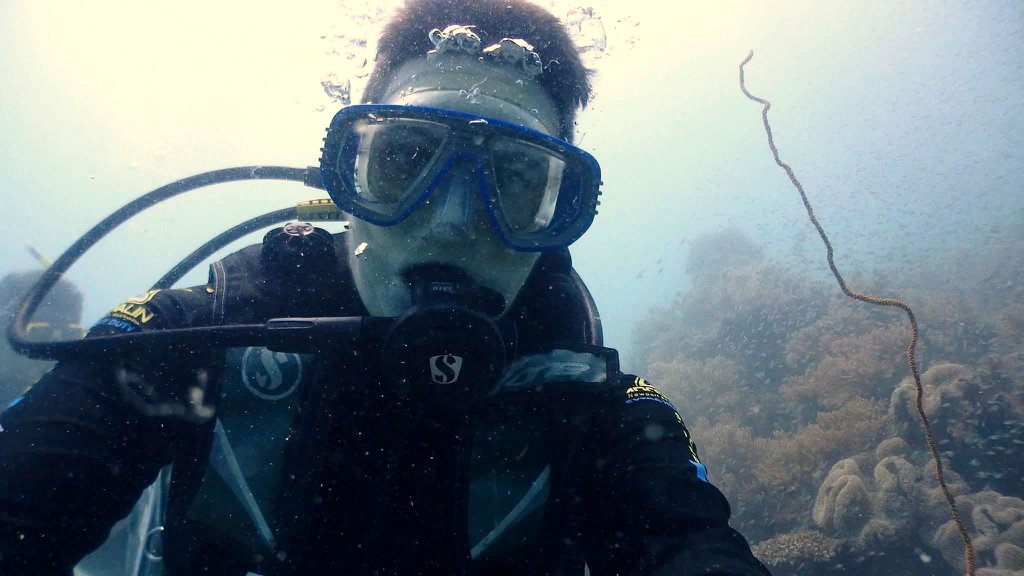
That’s me on the Great Barrier Reef

I spent Monday evening teaching SCUBA theory to three blokes who seemed fixated on how many ways SCUBA can kill you. Obviously you can die SCUBA diving but the whole point of teaching safety and calculations etc is to prevent that happening. Almost the entire evening boiled down to …’there are old divers and there are bold divers but there are no old, bold divers’. Translated: do as you’re told, take safety seriously and you’ll have a better chance of survival.

Look, I know that calculating a risk is not sexy. I’m at a point in my life where I don’t care what you think. I prefer to come up from dive a little tired and grinning at the wonderful things I’ve seen or learned along the way. What set them off was a true story of the day there was an unsuccessful rescue of a diver at a site I was visiting. I don’t particularly know the details of what happened only that I was amongst those who helped in the rescue and aftermath. I’m sure it haunts the people directly involved to this day.

Tuesday I took a couple of those same blokes into the swimming pool (the have not progressed into open water yet) to practice rescue techniques. Let’s say they will get some more practice before we let them out into the real world. It’s hard trying to relate the safety of the pool environment to the great outdoors and a surprising number of big husky guys and gals revert to holding the instructors hand like a child when they get into a diving centre’s water for the first time. Eventually though they learn to float effortlessly with the flow and it becomes an almost meditative experience. I’m lucky. I’ve been a BSAC dive Instructor for about 5 years at time of writing, and diving for about 8 years or so. I get to practice all the skills very regularly because I’m teaching them. Complete mask removal and replacement in 4 degree (centigrade) water if not fun but it proves that you could do it if you needed to, it is not that cold at the moment and was a balmy 11 degrees C in the deep end of the quarry last week.

A word about quarries. The one where I dive is not a working quarry. It has been converted into a dive centre. There is a phone and rescue equipment, certified rescuers… that sort of thing. To anyone out there thinking of a refreshing dunk in your local water source please don’t do it unless properly trained and equipped. I spend a chunk of time every summer explaining to parents and teens that the water may look lovely but it is both deep (your toddler will get into difficulty in 6 to 20 metres of water) and cold (look there’s a reason I’m wearing this diving suit and rubber hood). Even the open water swimmers are wearing full length wetsuits and carrying floats. At the moment most of the UK is staying indoors (it is summer) as its heaving down with rain but once that sun shines you know that some teenage boy is going to die by being too bold in very cold water. For reference it’s the shock to your system of a huge temperature change. (I have swum, supervised in a dock in the North of England wearing nothing but a swim suit in November, a long time ago. It was for a lifesavers exam. I really can’t recommend it).

Rapid Ascent

I scuba diving, as in life, a rapid ascent can bring problems. At the weekend I had the job of taking a couple of divers in to test a rescue skill needed for their qualification. It’s that thing you need when you’re out of air! Not a recommended situation and not something that should happen in the course of a normal dive. Still we train so that if it does happen we are prepared.

Under normal conditions a diver should not exceed 15 metres per second when returning to the surface. If a diver is out of air for some reason they should signal to their buddy and take the spare regulator (breathing mouthpiece) so both can carefully get to the surface together. My trainees had completed one careful lift from 10 to 6 metres depth and dropped to change roles (hero becomes victim). All systems checked. Everybody neutrally buoyant (nicely floaty, like in space) and off we go. This should have been easy. For what ever reason my trainees shot up like a rocket and ended up breaking surface. One complained that the computer was beeping and would not stop so we made for the exit slipway and did not continue out dive.

Sitting on the café over a brew we discussed the issue. Checking my computer I could see that we came up at twice the recommended rate and then some. These were not novice divers and have done this manoeuvre many times in practice. For whatever reason when it is being watched by an instructor everything goes to pieces. When you dive you take on air (or other gases) at pressure so your lungs stay inflated. Which means you take in more of every gas that is in air (in this case). Still at 21% oxygen and 79% nitrogen but at higher concentrations. The issue is the nitrogen. Too high a concentration and you get a ‘bend’ or decompression Illness. If you come up slowly some of the nitrogen flushes from your system. Come up too quickly….

Contrary to logic you should dump air from your buoyancy system as you rise to the surface. The air inside will expand as the pressure (caused by the depth) lessens. Forget to take the air out….result rocket speed. If you are at any real depth this can cause you to pass out. De brief over we returned to our respective homes. Now the nice thing about a nitrogen overdose is that you have to rest, complete rest, when you get home. The nasty stuff can be a rash, nausea, dizziness aching joints (hence the bends) and all manner of things. So home to the pyjamas and the sofa.

All divers involved are fit and well two days later. No trip to the chamber for us. Lessons learned.

New year, Who dis?

That is the question eh? Aren’t we supposed to be setting resolutions and reviewing the past year with a view to cutting all that is toxic from our lives and striding hopefully forward? Call me an old curmudgeon but I went to bed at the usual time on the 31st December only to be woken (briefly) by fireworks around the midnight hour. Did the usual things on the (ate, drank tea, watched telly, read) and on the 2nd went scuba diving as you do.

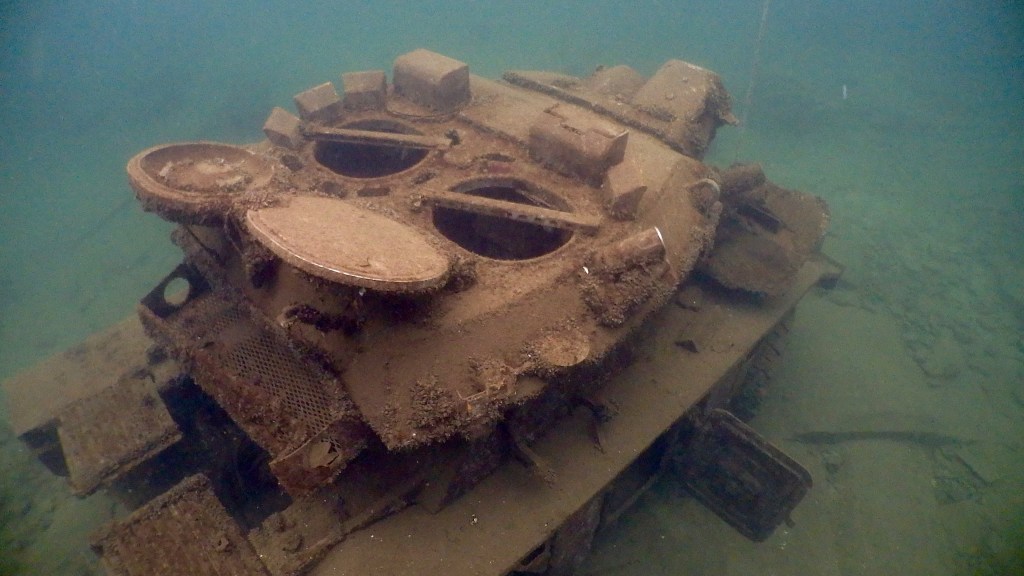
What is known as the ‘tank’ at the Delph Water Sports Centre, Eccleston, Lancashire. Photo is mine own

The best thing about diving I often say, is that all you can do is breathe. Stop doing that, or even hold your breath for a second too long, and things get interesting very quickly. I’m an instructor and put one of my students through his paces with some rescue skills. He did fine for a man who had been ambushed! We tootled around the shallow end (a mere 6-9m an average UK home is about 8m to the point of the house) for half an hour or so and came out a tad chill and ready for a coffee.

It’s a very meditative sport when you’re under water. If you get it right there’s a wonderful sense of weightlessness when you’re underwater (matched only by an incredible sense of ‘how heavy is this kit’ when on land). It’s a very peaceful place. Watching the fish glide by and rediscovering old friends like the tank in the image above. You have to learn patience in your preparation and in dealings with some less than considerate water users. You learn to go slow. No point in the fish shooting past in a blur as you zoom by finning like crazy. Even if you come up from the bottom too fast you stand a chance of getting a DCI (Decompression illness sometimes known as a bend). Everything about diving can be summed up as slow, patient wonder.

Today for a change I’m baking. You need patience for that too. I’m typing as the dough proves for the first time. No worries. No hurry.